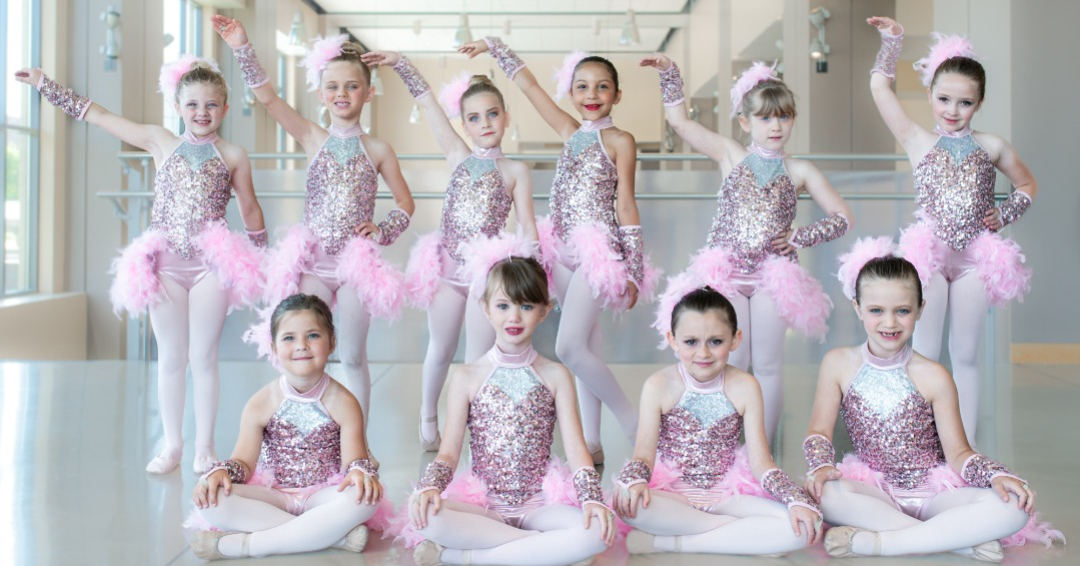
Dancers must be 6 years old by October 1 to enroll in Sparkle 6 Ballet.

Your child will soar in Sparkle 6 Ballet as he or she gracefully learns to communicate captivating stories with primary ballet technique and classical ballet pantomime.
Because sixes easily relate to the world of pretend play, the technique is often introduced through imaginative storylines.
The pretend-play aspect of Sparkle 6 Ballet both engages students and serves as a discovery of ballet’s rich culture, in which many classic performances are stories told through dance and pantomime.
Primary ballet technique that was introduced in Sparkle 5 Ballet is performed with greater proficiency in Sparkle 6 Ballet. Dancers are never pushed beyond safe physical limits.
Sparkle 6 Ballet students benefit from increased balance, agility, and gross motor development. Therefore, they work turned out a majority of the time, master primary level arm positions and movements, and enjoy collaborating with classmates to create intricate formations. 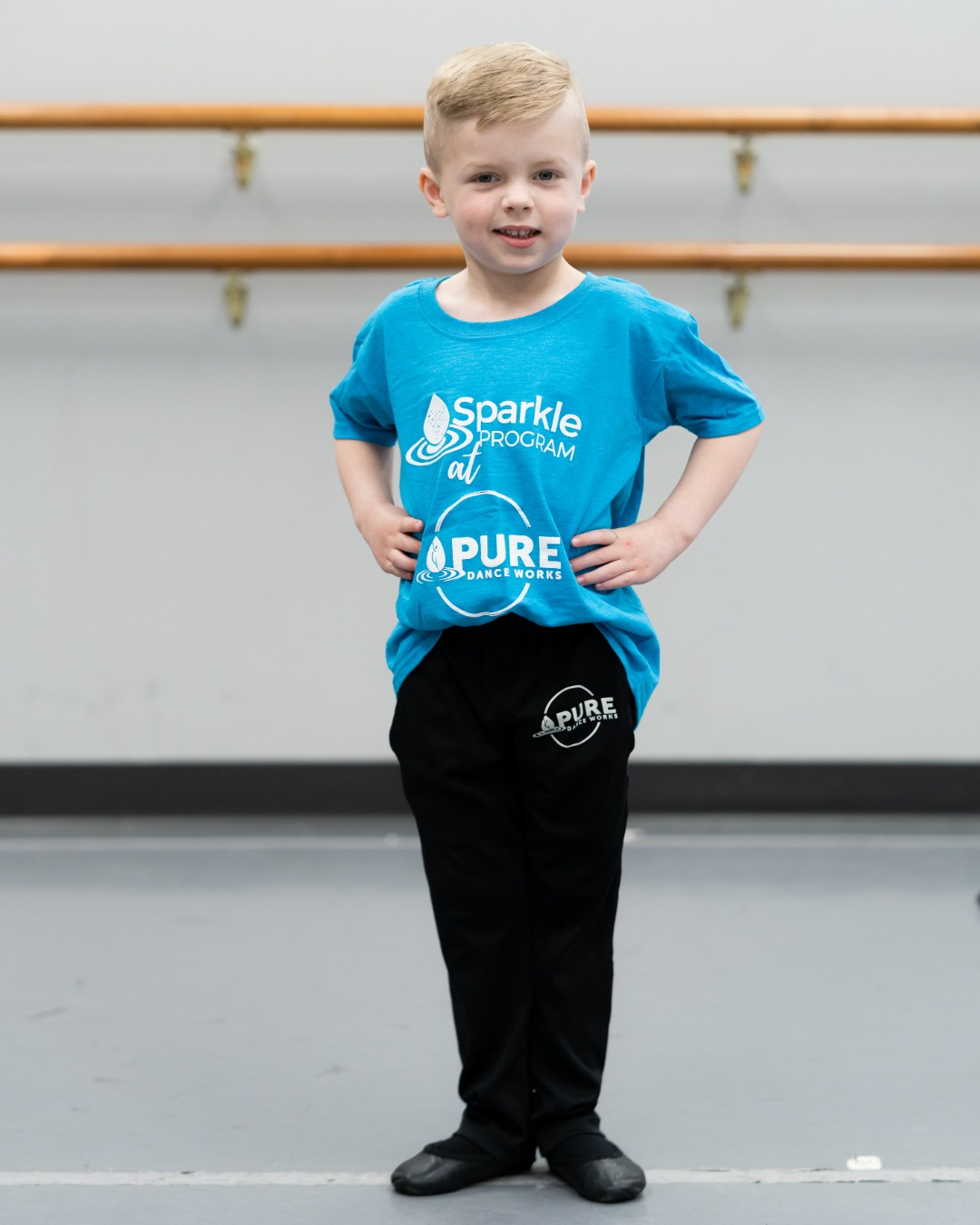
Teachers trained and certified in the proven Leap 'N Learn method intentionally nurture the physical, social, emotional, and cognitive development of a typical six-year-old in every class using professionally designed, developmental- and education-based lesson plans.
Dancer Manners are an important part of the Sparkle Program. Dancers are recognized as Star Students when they show respect for the teacher, their friends, and the dance space.
Etiquette is a universal ballet concept that has lovely implications when applied in other areas of a dancer's life.
Sparkle 6 Ballet students develop knowledge and understanding of French terminology.
As students progress through the primary levels, teachers drop the English words associated with French terms more frequently.
Sometimes the teacher will say, “Princess plié” and sometimes she’ll just say “plié.”
Emotions play an important role in our personal lives and in the world of dance.
They are discussed and expressed frequently in class, and emotional awareness is developed through specific activities designed to help children identify and express various emotions in a safe, stress-free environment.
The ability to identify and express emotions is a vital part of healthy early development.
Musical awareness advances in the primary ballet levels as students can now be expected to start on the count of "1" independently, can count and clap more complex rhythms, and demonstrate a greater ability to execute steps in time with the music.
The use of props such as fans fosters creativity and artistry.
Props also provide a deeper understanding and incorporation of movement concepts presented in class, such as tempo, which can be allegro (fast), moderate (medium), or adagio (slow).
Weekly coloring sheets display a central component of the day’s lesson plan, such as “Symmetrical or Asymmetrical Shapes.”
They are a perfect conversation starter that gives parents an opportunity to further facilitate their child's understanding and retention of class content.
Dress Code
Every class has a required dress code.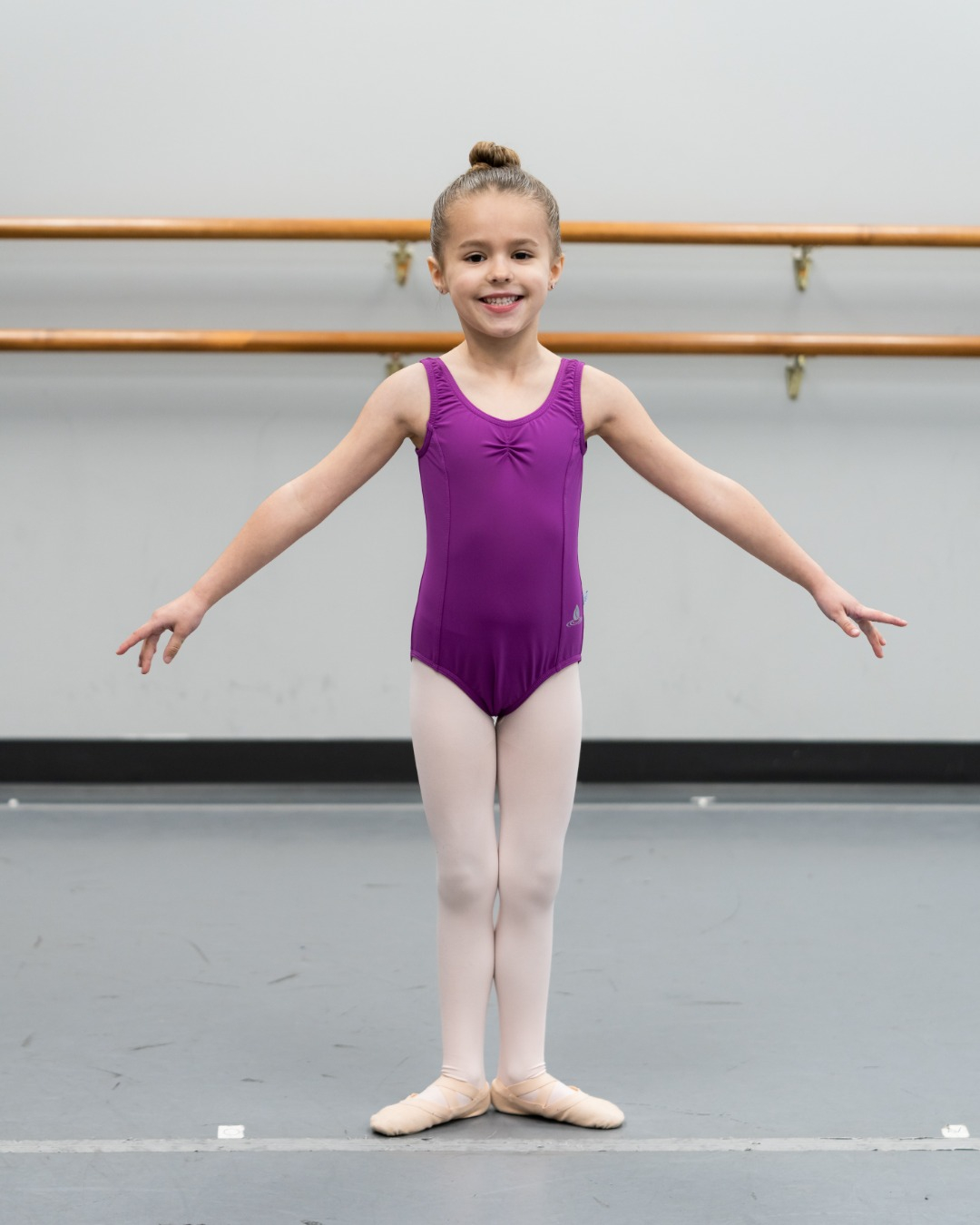
Please see the Dress Code page for details.
One uniform is INCLUDED annually!
Class Info
- Class size | 5-12 students
- Frequency | Once a week for 60 minutes
- Performance | Students enrolled by the deadline for the 40-week season perform in December and January. All costumes are INCLUDED :).
Pricing & Inclusions
You'll find information on pricing and discover everything that is included(!) on the Super Simple Pricing page.
What’s Next?
During the Spring Awards Ceremony, Sparkle 6 students graduate from the Sparkle Program and join the Ripple Program.
In Ripple 1 Ballet, students will train in preparatory technique, which is the final step before classical ballet technique. Cognitively and physically, dancers are ready to begin classical training at age 8.
Enroll Here